
There are many sites online that will tell you that you can visit over 50 countries with a Philippines passport visa-free – which is not true. There are only over 30 countries offering visa-free to Filipinos, and about 40+ offering evisa or visa on arrival.
Filipinos are very much aware that the passport they hold is not the strongest when it comes to travelling. According to CNN, Singapore is the strongest passport in the world, which allows Singaporeans to travel to 192 countries without a visa, while according to CNTraveler, Japan holds the number #1 spot with 193 countries.
Regardless, the Philippines passport is ranked #79, which means there are around 66 countries that allow Filipino travellers to enter their country without a visa. That’s a long way down from its neighbour Southeast Asian neighbour Singapore or Malaysia, which sits at rank #12.
But don’t get discouraged, travel enthusiast Filipinos can still explore the world. I started travelling in 2013, and 10 years later, I crossed my 30th country using only a Philippines passport.
I know that’s not really impressive, but it is still quite a personal feat for an average Filipino with limited income.
In this article, I listed all the visa-free countries for Filipinos to kickstart their travel adventure. I also included evisa or visa on arrival, since this type of visa doesn’t really require a complicated process.
WHY TRAVEL TO VISA-FREE COUNTRIES
I know many Filipinos dream of visiting Europe, the US, or East Asia. But these countries require you to apply for a strict visa application.
The good thing about visa-free countries is that not only are they affordable, but they help make your Philippines passport stronger.
A great travel history (regardless of whether it’s from visa-free destinations) showcases that travelling is your hobby, and you have a good history of not staying in one country as an illegal alien.
You can take advantage of these destinations to build up your travel history, which is great when you apply for visas in Europe/Schengen, Australia, Canada, and the US.
VISA TYPES THAT YOU MUST KNOW

It can be confusing learning about visas since there are various kinds with different purposes, plus its relation between countries. To give you some ideas, I will discuss the common visa types to help you understand if you need to apply for a visa, pay for one, or not.
What is a free visa?
A free visa means you can travel to a country without applying for a visa in advance or paying any visa fee. Destinations that offer visa-free countries for Filipinos are usually located in Asia, Africa, and Latin America.
However, when leaving the Philippines and your destination is a visa-free country, the immigration officer (in the Philippines) will most likely ask you to prove that you are coming back to the Philippines or that you can afford this trip – especially for Filipino travellers going abroad for the very first time.
A proof includes but is not limited to:
- return ticket
- hotel bookings
- tour booking
- certificate of employment
- business registration
- bank statement
- tax returns
- school registration (for students)
- proof that you can legally bring a minor with you abroad (for example, bringing a niece, nephew, your children if you’re separated or not married to the mother)
Upon arrival at your destination, the immigration officer there might also ask for your travel bookings such as flights and hotels.
What is an evisa or visa on arrival?
An evisa (e-visa) is an electronic visa that you can apply for online. All you need to do is fill in your personal details, travel dates, and point of entry and then pay the fee. – all done online.
Wait for a few business days, and you will receive your evisa. Depending on the country, you must have a physical printed copy of your evisa or simply show a digital one.
The validity of an evisa depends on each country (destination). Usually, it is valid or allows you to stay between 14 days, 30 days, and even 90 days. The cost also rises the more days you request.
Some evisa sometimes don’t even ask you to pay in advance, such as Nepal. You will make your payment when you arrive at your destination and pay in major currencies such as USD, Euro, CAD, NZDand AUD.
What is visa on arrival?
A visa on arrival or VoA is a visa that you can receive upon entry or arrival at the destination. On a visa on arrival, you will be asked to show your flight out (return flight or flight to the next country) and pay the fee.
Just like an evisa, a VoA duration sometimes ranges between 15 days to 90 days and the cost varies too. Make sure that you have major currencies with you such as USD, GBP, and EURO for the payment. You will most likely receive the change in the local currency.
What is a transit visa?
A transit visa or a connection visa is when you need a specific visa to transit or connect to a specific country.
For example, you have a flight from the Philippines to France, but it has a connection to Turkey. In this situation, you will need to check with Turkey if you need a transit visa to make this flight possible.
In general, you don’t need a transit visa if you’re not leaving the airport area or the “transit area”. Not leaving this area means you will not be crossing the immigration area or leaving the airport altogether.
However, let’s say your flight from Manila to Paris connects to Tokyo. Usually, you don’t need a transit visa for Japan. Tokyo has two airports (Narita and Haneda). If you arrive from Manila to Tokyo in Narita, then your next flight also leaves Narita, you don’t need a transit visa.
But, if you arrive at Narita airport from Manila, then your next flight from Japan to France is leaving from Haneda, then you need a transit visa. This is because you will have to leave the transit area and the entire airport to get to another airport.
This is not true in all situations. Some airlines will facilitate the transfer between one airport to another without you “technically” leaving the transit area, but it’s rare.
From Manila, the most common countries where you have to connect to get to Europe, North America, Africa, Latin America, Oceania, and other parts of Asia are Japan, Turkey, Hong Kong, China, Thailand, and Singapore.
These countries usually don’t require a transit visa if you’re starting in the transit area. The two places that you must be aware of are the US and Canada. These two countries require you to hold a transit visa when connecting.
What is a substitute visa?
A substitute visa is when you have a valid travel visa or residency visa from strong countries such as the US, the UK, Canada, Australia, Schengen/Europe, New Zealand, Singapore or Japan. 95% of the time, that visa must still be valid.
If you’re holding such a visa from these countries and you plan to visit a country that requires you a visa, you can skip applying for that visa and substitute your other valid visa. That’s a mouthful and super confusing, so let me give a sample:
I have a valid tourist visa from the US, and I want to travel to Canada. Canada requires Filipino travellers to apply for a Canadian visa. But for me, I don’t have to apply for a Canadian tourist visa. Instead, I can simply “substitute” that Canadian visa with my US visa.
Does it make sense?
However, you must remember that each country or destination that allows substitute visas has a specific requirement for using a substitute visa.
Here’s a sample. For my trip to Canada, the only way I could use my US tourist visa as a substitute is to arrive in Canada by air. This means that if I am in the US already, I cannot cross the border to Canada by land. I must book a flight and arrive in an airport in Canada.
VISA-FREE COUNTRIES FOR FILIPINOS – PHILIPPINES PASSPORT HOLDERS
I categorised the list below to help you navigate the page. You’ll find how many days you can stay in each country while enjoying a free visa as well.
There are also tips on how to get evisa and visa on arrival, plus a substitute visa (if you hold a visa from the US, UK, Schengen/Europe, Japan, New Zealand, and Australia).
Guide: * (one asterisk) – stands for territories | ** (two asterisks) – stands for evisa or visa on arrival
Africa
I love travelling around Africa with my Philippines passport because there are many destinations in Africa Filipinos could go to without worrying about getting a visa in advance.
The only downside is making travel arrangements such as flights. Since there are no direct flights from the Philippines to Africa, you want to make sure you’re booking a ticket that connects or transits in a country that doesn’t require a transit visa for Filipinos.
Some destinations in Africa might also ask you to hold a Yellow Fever vaccination card, so this is something you must check in advance before your flight.
- Benin** – evisa for 30 days and must carry an international vaccination certificate
- Botswana – evisa for 90 days
- Burkina Faso – evisa
- Burundi – 30 days visa on arrival
- Cameroon – evisa
- Cape Verde – visa on arrival for 30 days
- Cote d’Ivoire – 90 days
- Democratic Republic of Congo – evisa for 7 days
- Djibouti – 31 days evisa
- Equatorial Guinea – evisa
- Ethiopia – evisa or visa on arrival for 90 days
- Gabon – 90 days evisa
- Guinea – evisa valid for 90 days
- Guinea-Bissau – 90 days visa upon arrival
- Kenya – evisa for 90 days
- Lesotho – evisa
- Madagascar – evisa or visa on arrival for 60 days
- Malawi – 90 days visa on arrival or evisa
- Maldives – visa on arrival for 30 days
- Mauritania – visa on arrival
- Mauritius – 60 days visa on arrival
- Morocco – 90 days
- Mozambique – 30 days visa on arrival or evisa
- Nigeria – evisa for 90 days
- Rwanda – 90 days
- Sao Tome and Principe – evisa
- Senegal – visa on arrival for 90 days
- Seychelles – 90 days visa on arrival
- Sierra Leone – 30 days evisa
- Somalia – visa on arrival 30 days
- South Africa – evisa for 30 days
- South Sudan – evisa
- Tanzania – evisa or visa on arrival for 90 days
- Togo – 15 days evisa
- Uganda – 90 days evisa
- Zambia – evisa for 90 days
- Zimbabwe – 90 days evisa
East, South, and Southeast Asia
Asia is a massive continent with around 48 countries, but not all of them offer visa-free to Filipino passport holders.
On the other hand, Southeast Asia countries have great relationships with one another, allowing Filipinos to travel without a visa.
If you are building your visa or travel portfolio (this helps with applying for harder visas such as the US, the UK, Australia, Japan, Europe, Australia, Canada, and New Zealand), Asia is a great place to start.
You can travel to 17 countries in Asia without a visa, while there are lots of places to go to that only require an evisa or allow you to enjoy a visa on arrival.
This section though, only shows you the countries located in East Asia, South Asia, and Southeast Asia. Don’t worry; there’s a separate list for the Middle East and Central Asia.
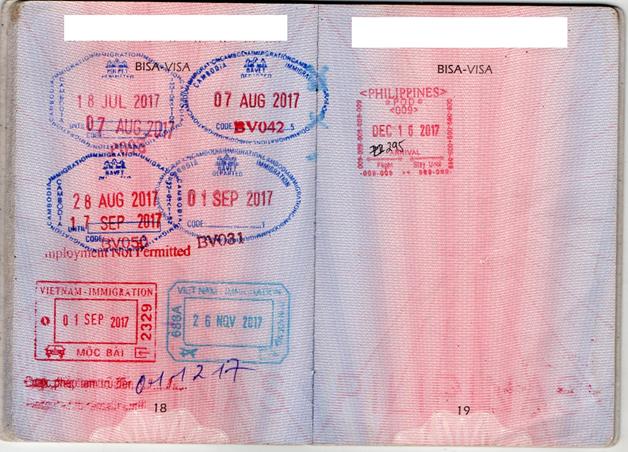
- Bhutan – evisa for 90 days
- Brunei – 14 days
- Hong Kong – 14 days
- Cambodia – 21 days
- India – evisa for 30 days
- Indonesia – 30 days
- Laos – 30 days
- Macao – 30 days
- Malaysia – 30 days
- Mongolia – 21 days
- Myanmar/Burma – 14 days
- Nepal – evisa or visa on arrival for 90 days – Nepal visa for Filipinos
- Pakistan – 90 days online visa/evisa
- Singapore – 30 days
- Sri Lanka – evisa or visa on arrival for 30 days
- Timor-Leste/East Timor – visa on arrival for 30 days
- Taiwan – 14 days (from Sep 20, 2022 to July 31, 2024 – extension if implementation will be/might be announced)
- Thailand – 30 days
- Vietnam – 21 days – read my Vietnam visa guide for Filipinos
Central Asia
Central Asia is located in a region near the Middle East, just before you reach Europe. This is where you’ll find the “stans”. Most flights towards Central Asia have connections to China, Hong Kong, the Middle East, and Turkey.
There are also countries here that you can go to and only apply for an evisa or use a substitute visa.
- Armenia – evisa for 90 to 180 days, or evisa for 120 days if have a valid visa from Australia, Canada, Japan, New Zealand, Russia, South Korea, the UK, the US, Schengen State, or GCC countries
- Georgia – evisa for 30 days or use your visa from the UK, US, Australia, New Zealand, and the Schengen States
- Kazakhstan – 30 days
- Kyrgyzstan – 30-day evisa or visa on arrival
- South Ossetia* – entry through Russia
- Tajikistan – 30 days
- Turkey: 30 days if have visa valid from the US, UK, and Schengen
- Uzbekistan: – evisa for 30 days
Central America/Caribbean
The Caribbean or Central America is known for stunning islands and beaches (just like the Philippines!) and is a famous honeymoon destination. It is another visa-free paradise for Filipinos.
The catch is that most of the flights heading here connect in the US or Canada. These two countries require Philippines passport holders to hold a valid US or Canada visa or a transit visa to book those flights.
- Antigua and Barbuda – visa on arrival if hold a valid visa from Canada, the UK, the US, or the Schengen State
- Bahamas – 30 days if you hold a permanent resident card from the US or Canada
- Barbados – 90 days
- Bermuda* – if connecting through the UK or has a valid visa from the US, Canada, or the UK
- Costa Rica – 30 days, can be extended up to 90 days
- Dominica – 21 days
- Haiti – 90 days
- Montserrat* – evisa possible
- Nicaragua – 90 days visa on arrival
- Saint Kitts and Nevis – evisa for 30 days
- Saint Lucia – 42 days for visa on arrival (6 weeks)
- Saint Vincent and the Grenadines – 90 days
- Trinidad and Tobago – visa on arrival
Europe
As Filipinos, we all know that travelling to Europe is one of the destinations when it comes to visas can be complicated and costly – but it’s definitely worth it.
A visa to Europe or a Schengen visa allows you to travel to 25+ countries with just one visa. On the other hand, it’s only valid for a maximum of 90 days. We are not here to talk about that, but you should check our guide on how to apply for a Schengen visa.
Unfortunately, there are no countries in Europe that give free visas to Filipino passport holders. There are destinations that allow you to substitute a visa or apply for an evisa.
You can check this compilation of Schengen visas from Europe.
- Albania – visa-free if holds a valid visa from the Schengen State, US, or the UK, validity (visa-on-arrival or evisa)
- Moldova – evisa
- Russia – evisa for 16 days on specific destinations only
Middle East
The Middle East is a known destination for OFW (overseas Filipino workers). However, there are very few countries that actually offer visa-free to Filipinos in the Middle East.
It’s still a great way to strengthen your passport and travel history.
But, when these are your destinations, and you’re departing from the Philippines, you might raise a red flag. Immigration officers (on both sides) can automatically assume that you are heading to the Middle East to work or look for work illegally.
- Bahrain – 14 days if you hold an existing Saudi Iaqama, entry via King Fahad Causeway Bridge
- Iran – 30 days evisa
- Israel – 90 days
- Palestine – 90 days (entry only via Israel; days counted included Israel stays)
- Qatar – evisa
- Turkish Republic of Northern Cyprus* – 90 days
North America
There are only three countries in North America (Canada, Mexico, and the USA – some might argue Greenland but it’s a territory).
While there are no visa-free countries for Filipinos in North America, you can actually travel to some places here with a substitute visa.
For holders of valid US visas (tourist or resident/work), you can use that visa to enter and travel to Canada and Mexico.
For holders of valid Canadian visas (tourist and resident), you can use it as a substitute visa for Mexico.
- Canada – you can enter here with a substitute visa, a valid US visa (must arrive by air)
- Mexico – with a valid visa from the US or Canada, you can use those visas to enter and travel here
Oceania
If travelling to the Caribbean is too challenging but you want those fine white-sand beaches and beautiful islands, Oceania should be your destination.
It’s not too far from the Philippines, and many countries there offer a free visa. The only obstacle is finding flights. But don’t worry, many flights heading to Oceania connect in Southeast Asia (Singapore, Malaysia, Thailand, or Indonesia).
- Cook Islands* – 31 days
- Fiji – 120 days
- Kiribati – 90 days
- Micronesia – 30 days
- Niue* – 30 days
- Palau – visa on arrival for 30 days
- Papua New Guinea – 60 days evisa
- Samoa – 60 days
- Tuvalu – visa on arrival for 30 days
- Vanuatu – 30 days
READ: Australia visa guide for Philippines passport holders
South America
When I travelled to South America, I couldn’t help but plan so many places to see, and it’s because of many reasons.
One, it’s hard and expensive to get there. Just like the Caribbean, flights to South America connect to the US or Canada. At that time, I didn’t have a US visa yet, so booking a flight was not easy.
Luckily, I was travelling from Europe, and I found a flight leaving Germany heading to Brazil. I booked that. Since I’m already in that part of the world, I have to make the trip count by visiting multiple countries.
And second, there are plenty of visa-free destinations in South America for us Filipinos. Although I only managed to get to three: Brazil, Colombia, and Peru (more reasons to return!).

- Bolivia – 90 days
- Brazil – 90 days
- Colombia – 90 days
- Ecuador – online visa or evisa
- Peru – 90 days
- Suriname – 90 days
FINAL TIPS
Horror stories about the immigration of the Philippines, challenging visas, and expensive flights are some of the reasons why some Filipinos might be scared to travel around the world.
While these are extremely valid reasons, there are more reasons why you should go.
Travelling is not only for rich people and passport holders from the West. You can get to your bucket list destinations, with great will and planning. It might take longer (like me), cost more, and bring heartache (from offloading and denied visa application); you owe it to yourself to make that travel dream a reality.
My top visa tip is to spend your money travelling to neighbouring countries first instead of applying for challenging visas (where you might be wasting your time, money, and motivation).
Don’t let your rank #79 passport stop you from exploring the world.
I hope that this list of visa-free countries for Filipinos has been helpful and inspiring.